Italian noir novellas printed on yellow pamphlets gave way to the creation of the giallo subgenre of noir fiction. And in the 1970s (my favorite time for movies!), giallo films pushed their way to take a large chunk of the take in movie theaters. And for good reason: giallo was gritty and dark, engrossing; a far contrast from the lighthearted and casual Blaxploitation and kung-fu movies.
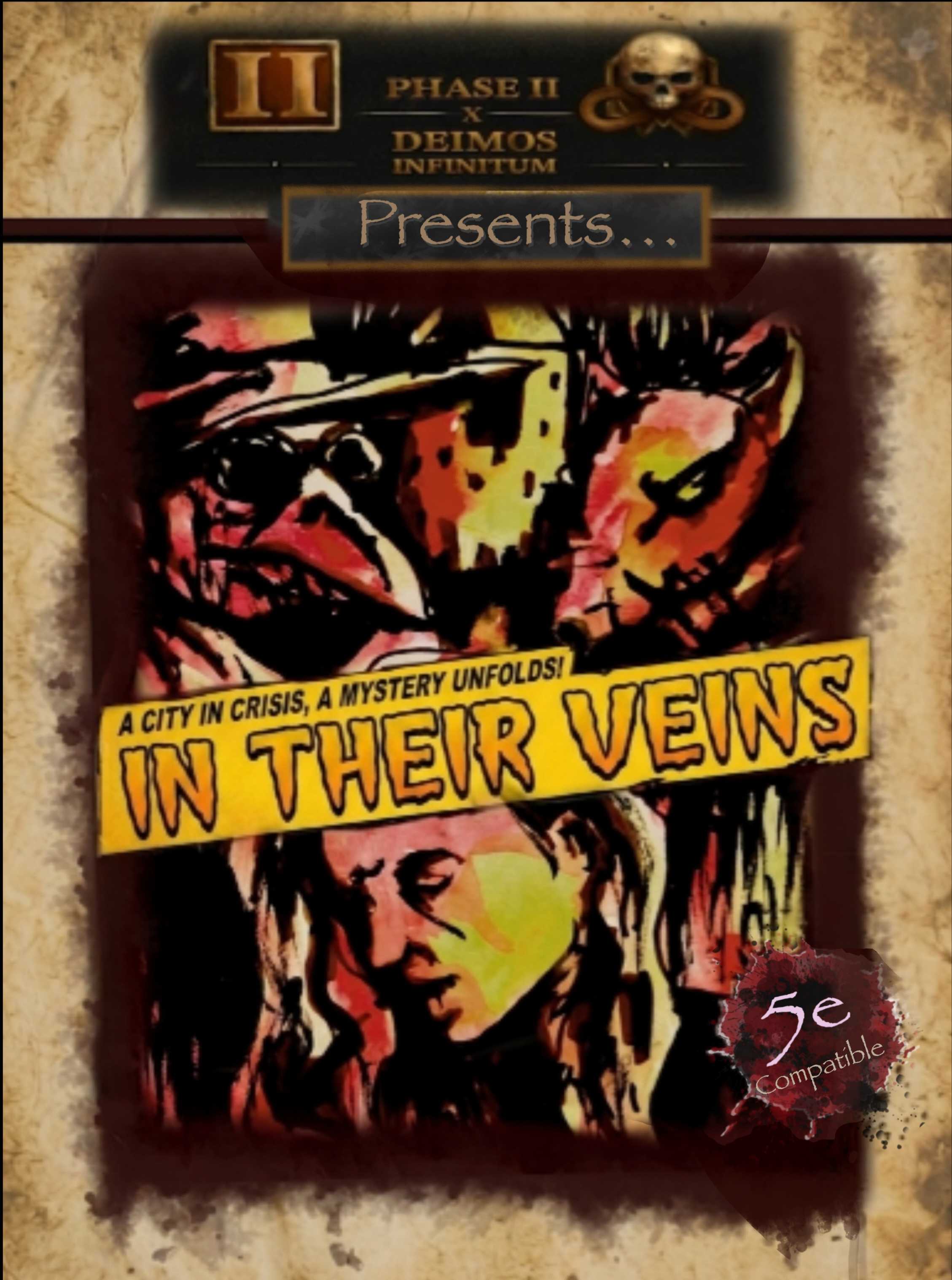
Check out In Their Veins, a giallo-inspired noir adventure:
Giallo is also the unsung hero of the “slasher” genre of horror films, as well as what people tend to call “themed serial killer” movies like Se7en and The Bone Collector. But giallo did it all first, and that can’t be denied. So why care about this genre if you’re playing a TTRPG? Well, you’re role-playing, and mystery and intrigue make for the best (yes, hands down, undeniable, and screw your talking pandas) role-playing experiences.
And it’s easy to incorporate these themes and tropes into your game. The first step is to have the PCs find the giant talking panda murdered with an “M” carved in its huge belly. Read on for the rest.
Unreliable Narration
Because noir relies on suspicion, mystery, twists, and all the rest, many films (particularly giallo) have unreliable narrators. This means that the person telling the story is quite possibly inadvertently lying to the audience … primarily because they don’t know the full story.
For a role-playing game, you simply cannot do that as a GM. Violating player trust is a sin so cardinal that you may never be able to find players for your games again. But there are ways to incorporate the idea into your game without outright lying to your players.
Your NPCs serve as narrators to the players during social role-play scenarios. Use that to your advantage. Just like the narrator in a story or movie may not know the whole story, an NPC does not know everything, especially in a twisted plot that could span across the entire kingdom. The key is to make sure players know that the NPC may not actually know: they may have heard it on the grapevine, read it somewhere, or seen it happen by dim candlelight.
Red herrings are also a great way to add a twist your players would actually appreciate. Many players build their own narrative when you feed them clues, and you may not even need an official red herring. If you don’t have a player who goes all-in on their own theories, throw in some clues that seem to point to one NPC who just happens to be completely innocent. Maybe they had blood on their boots and cuts on their hands, but it turned out they had just helped the butcher that morning and the two are good friends.
Stylized Violence
The key to slasher films and those modern themed-killer movies. We’ve all seen them: the killer who only kills with a meat hook; the killer who fills victims’ houses with gas before he enters; the killer who picks his victims based on their first name in alphabetical order. And the costumes in slasher films are also straight out of giallo: the smiley-face ghost mask, a hockey mask, a Captain Kirk mask.
These are easy to bring into the flow of your game. With the many cool weapons and armor available, you can make the killer someone who wears a helmet with a red “X” across the forehead; they may use trademark yellow gauntlets; they may kill by stabbing their victims in the eye with an arrow (not shooting, stabbing). Get creative, and your players will have a blast.
Mysterious, Shadowy Killers
In the movies, the killer is generally not shown (other than black gloves and dark clothing) until the reveal. This leads viewers to formulate their own theories about what is actually happening and who the killer may be. This makes them invested in the film, and it’s exactly why mysteries work so well. People love to formulate theories, and they love to be right. But secretly, they love to be surprised even more.
Leave clues for the players during their investigation. Perhaps they find a green and orange feather at one crime scene and some seeds at another... now they probably suspect the owner of the aviary. But the killer may actually be a collector of native ritual masks who is poisoning victims using seeds slipped into their food. Or keep the mystery alive by having multiple witnesses see mostly different things, but agree on one or two details: one says the killer was very tall, the other says the killer was short, but they both say the killer smelled like smoke. Which, by the way, we should have more characters smoke in our TTRPGs, as it adds to the gritty feel. Hit me with your best counterarguments.
Voyeurism
In giallo, the crimes are usually driven by obsession or repressed trauma. So victims are being watched through their bedroom window, unaware of the killer’s gaze, or stalked through the streets. The audience (like the killer) sees everything before the victim does. It is deeply unsettling and deliberately so.
Voyeurism in a TTRPG doesn’t have to be sexual. Leave hints that the PCs are being watched or followed. Maybe the killer taunts them by sending a note. Or they are told something they said or did in private by an NPC who was bribed to relay the message as a taunt. Have the PCs walk through a seemingly empty area and hear rustling nearby. Then have a shadowy figure bolt out of range before they can follow.
Strange Supporting Characters
Perhaps my favorite trope. Supporting characters add a sense of danger when they do unpredictable things or exhibit strange behaviors. Someone not related to the investigation could be sitting by themselves just chuckling for no reason. Another may be a patron at a restaurant who adds a ton of sugar to their soup or hot sauce into their coffee.
While describing a scene, throw in an odd character wearing shoes on their hands. Or pants on their head. Or have a stranger approach the PCs and ask a completely out-of-left-field question: “Did you take my chicken’s coat?” Or they start talking or walking backwards out of nowhere. Anything completely unexpected will shake the PCs and change the feel of the scene (and the adventure in general) to add suspense simply by showing players that they can’t let their guard down, because the whole world seems corrupted.
A Fatalistic Worldview with Bleak Endings
In giallo, the protagonist is a pessimist and a cynic, or they become that way as the world is revealed to them. Already from seeing this personality trait, you as the viewer know that things may not end well. That dread is baked in from the start.
Make the primary NPCs echo a fatalistic worldview in their casual conversations. If the PCs are assisting an investigator, have that NPC mention how a local family was killed by a stray bear. Or have him reluctantly meet up with the PCs the next day after a day of investigation and reveal that his own wife was murdered overnight, causing him to suddenly give up and leaving the PCs to solve the killings on their own. Or have the burgomaster plow through town at full speed, mowing down a couple of townsfolk without a care, like Monsieur the Marquis does in A Tale of Two Cities. He continues at full speed to his mansion, and the PCs are interrupted by another NPC with urgent new evidence about the killer. This leaves them no time to pursue justice from the burgomaster. Death comes here for everyone without a care.
And that’s it! If you haven’t already, check out the first part of this series from a few issues back, full of tips from noir in general that I think you’ll love:
And find some of our noir adventures in the store: