Your players just found the crucial clue. You describe the ancient map in vivid detail: “The map’s faded ink depicts strange cryptic symbols, clearly outlining the route through the mountains.” They nod along. Someone takes notes. Then the moment passes and they’re back on their phones. Call of Cthulhu has been solving this problem since 1981: give them something to hold.
What Are Handouts?
Call of Cthulhu adventures come loaded with physical props: maps drawn on aged paper, newspaper clippings, letters written in character, photographs, telegrams, diary entries, and more. These are designed to be printed, cut out, and handed to players at the table as opposed to serving as illustrations in the book.
When the investigator finds a letter from the missing professor, you don’t describe it. You hand them an actual letter, written in shaky handwriting, with coffee stains and a torn corner.
The effect is immediate. Players pass it around, study it. Sometimes someone notices a detail you didn’t mention and the table gets quiet in the good way.
The players become focused, engaged, and their wheels start turning. That’s the magic. Handouts transform passive listening into active investigation.
Why This Works at the Table
Physical objects command attention in ways description never will. A player half-listening will snap to focus when you slide a cool-looking weathered map across the table.
Instead of frantic note-taking while you talk, the information lives on the handout. They can reference it later, study it together, and pin it to a conspiracy wall.
When you hand out a newspaper clipping, all players read it simultaneously. They’re looking at the same thing, noticing different details, building off each other’s observations. And they feel like a team.
It also respects player agency, because you’re not telling them what’s important. You’re giving them evidence and letting them figure it out. Maybe that torn corner means something, or maybe it doesn’t.
Finally, it’s just cool. Players love props. They’ll keep them and even reference them sessions later.
Adapting Handouts to Your Game
You don’t need cosmic horror to use handouts. Any game benefits from tangible clues.
Maps are obvious. But you can also provide wanted posters, royal decrees, letters between conspirators, sketches of monsters, fragments of prophecies, shipping manifests, tavern menus with hidden codes.
Corporate memos, chat logs, security camera screenshots, blueprints, fake IDs, data chip contents formatted as documents, news feeds.
Newspaper headlines about hero activities, villain manifestos, crime scene photos, security footage stills, secret identity documents, government files with redacted sections.
Building layouts, guard schedules, vault specifications, news articles about previous robberies, client dossiers, auction catalogs.
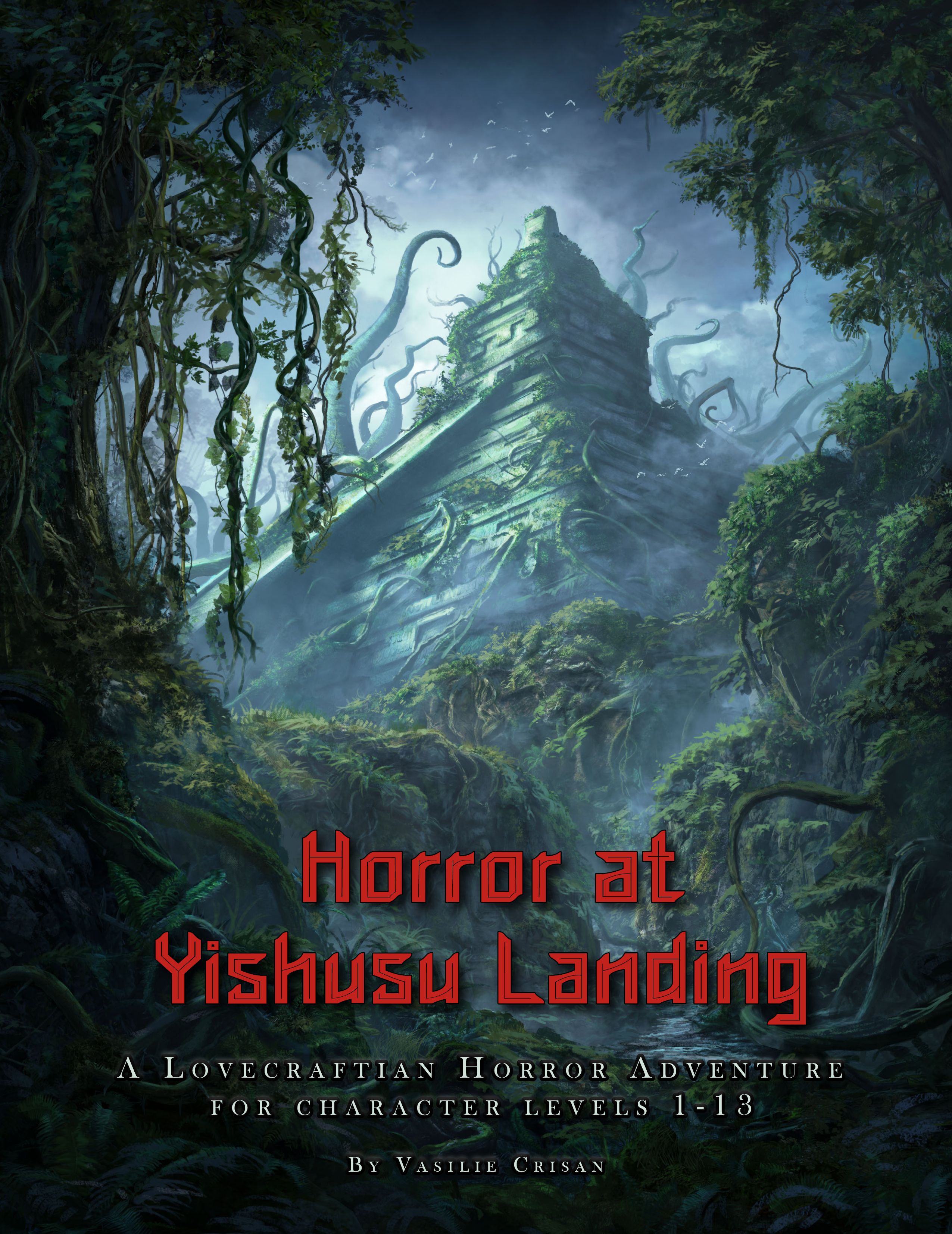
In my campaign adventure for 5e, Horror at Yishusu Landing, we used handouts for bounties PCs collect throughout the chapter. The key is making information physical. If players would normally just hear it, make them hold it instead.
Things to Be Careful About
Be aware of the session’s beats and pacing when giving handouts to your players. A handout given at the wrong time can quickly stop your game on a dime: it takes player attention from the rest of the table, and handouts usually cause the reader to hyper-focus on what’s in their hands. Some players stop listening and are taken from the table for a moment.
Plan for handouts to be given during moments when the focus is already on one or two players and it’s going to take a while before the other players have a turn. Give the other players a handout or two to keep them engaged while you give attention elsewhere. Make multiple copies so that all players have their own to read simultaneously. This speeds up the reading time by preventing them from passing a single sheet around one player at a time.
The Digital Table Solution
Running online? Handouts still work. Post images in chat that players can enlarge. Use shared documents they can all view simultaneously. Some VTTs let you distribute handouts directly to players. The principle remains: give players something to look at together, not just descriptions to absorb.
You lose the tactile element, but you gain searchability and easy reference. It’s a fair trade.
When to Use Handouts
Not everything needs a handout. Use them for:
- ▪Crucial clues the plot hinges on
- ▪Complex information that’s hard to track verbally (maps, timelines)
- ▪Moments you want to emphasize and make memorable
- ▪Information players should reference later
Don’t make handouts for trivial details. If it’s not important enough to prepare in advance, it doesn’t need a prop.
The Real Magic
Handouts change how players interact with information. They stop being passive recipients and become active investigators. They collaborate over physical evidence. They feel like they’re solving a mystery, instead of being led through a story.
And it takes minimal effort. Print a few pages before the session. Slide them across the table at the right moment and watch your players lean in.
Call of Cthulhu has known this for decades. Every other game should steal it.
Your next crucial clue doesn’t need a better description. It needs to be something your players can hold.